Mary Magdalene: The Illuminator
Reclaiming the True Story of Christ's Chief Apostle
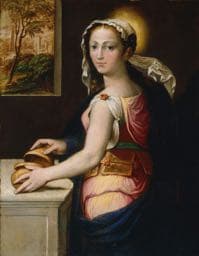
For nearly fifteen hundred years, a great injustice has been done to one of the most important figures in the Christian story. Mary Magdalene, the woman who stood at the foot of the cross, who was first to witness the resurrection, who carried the teachings of Christ across the Mediterranean to the shores of France, has been reduced in the popular imagination to a repentant prostitute. This distortion, which began in the sixth century with Pope Gregory, has obscured a far more profound truth about who she actually was and what her presence in the Gospels truly signifies.
The highest compliment I receive in my work is when people tell me that I gave them back their Christianity. And perhaps nowhere is this reclamation more vital than in the story of Mary Magdalene, because when we recover her true identity, we recover something essential about the original Christian teaching itself.
The Tower of the Flock
To understand Mary Magdalene, we must begin with her name. She came from Magdala, a town in the Galilee, and when the Gospels speak of "Mary of Magdala," they are saying something far more significant than simply identifying her hometown. Magdala means "the tower," and in the spiritual geography of first century Palestine, this was no ordinary place.
Magdala was a center of what scholars call merkabah mysticism, the Jewish contemplative tradition focused on the celestial chariot or throne upon which the mystic would ascend into the heavenly realms. This was the esoteric heart of Jewish spirituality, concerned not with rules and regulations but with direct experience of the Divine, with the ascent of the soul through the gates of heaven.
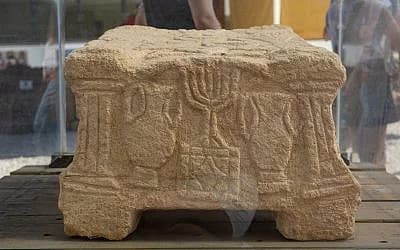
When the people of that time heard "Mary of Magdala," it would have carried something of the resonance we might feel today if someone said "she's from Oz." There was an otherworldly quality to the association, a sense that this woman came from a place devoted to the highest mystical pursuits. The Magdala Stone, which was discovered in the ruins of the ancient synagogue there and is presently on display at the archaeological site, is covered with merkabah imagery. This was the spiritual environment that shaped Mary Magdalene from her earliest years.
The Illuminatrix
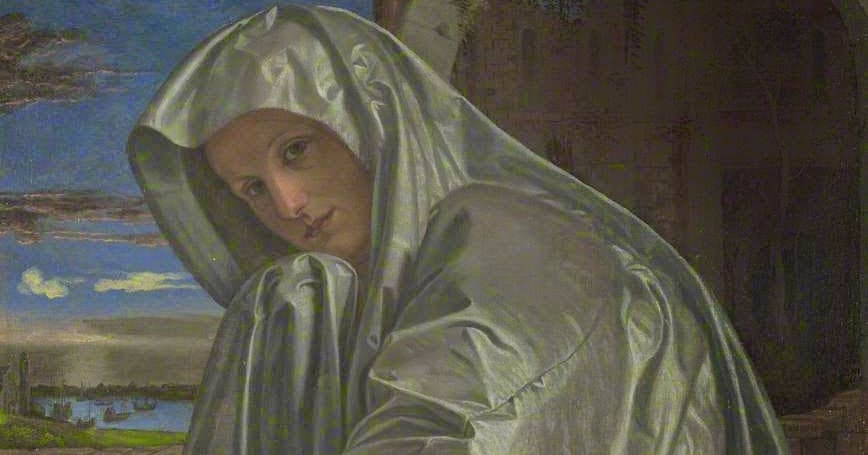
In my research, I have drawn extensively on the Golden Legend of Jacobus de Voragine, the thirteenth century compilation of saints' lives that was one of the most widely read books in medieval Europe. What Jacobus tells us about Mary Magdalene stands in stark contrast to the later defamation of her character. He calls her the illumined one, the illuminator, the illuminatrix.
This designation is not merely honorific. It points to her actual role in the early Christian community and to her spiritual attainment. In the original understanding, before the Church began its systematic diminishment of her importance, Mary Magdalene was recognized as Christ's chief apostle, his primary student, and in many traditions, his spiritual equal.
The term that the early texts use to describe their relationship is koinonias, which carries meanings of spiritual companionship, partnership, and intimate union. They were bound together not merely by affection but by shared mission. And this union, in all likelihood, included marriage, for it would have been unthinkable for a Jewish rabbi of that era to remain unmarried, and the closeness described in the Gospels makes far more sense when understood in this light.
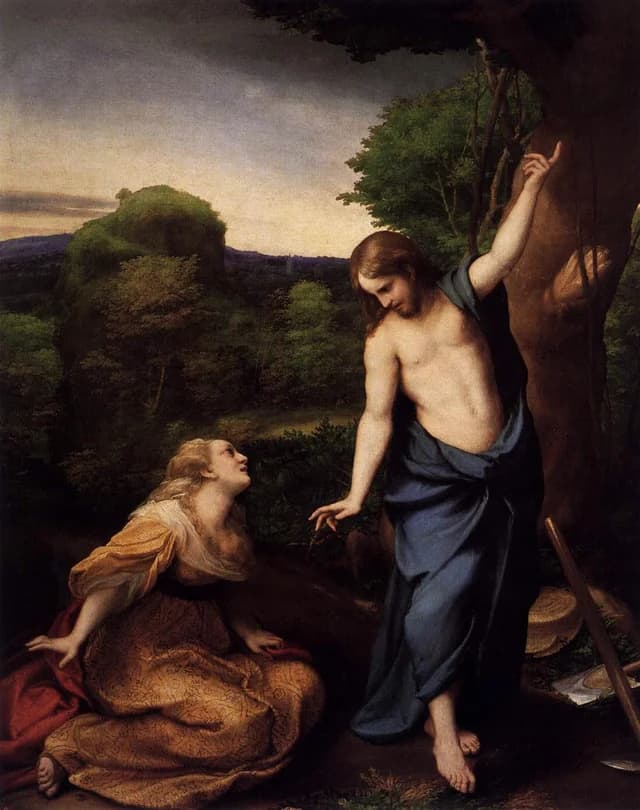
Priestess of the Sacred Oils
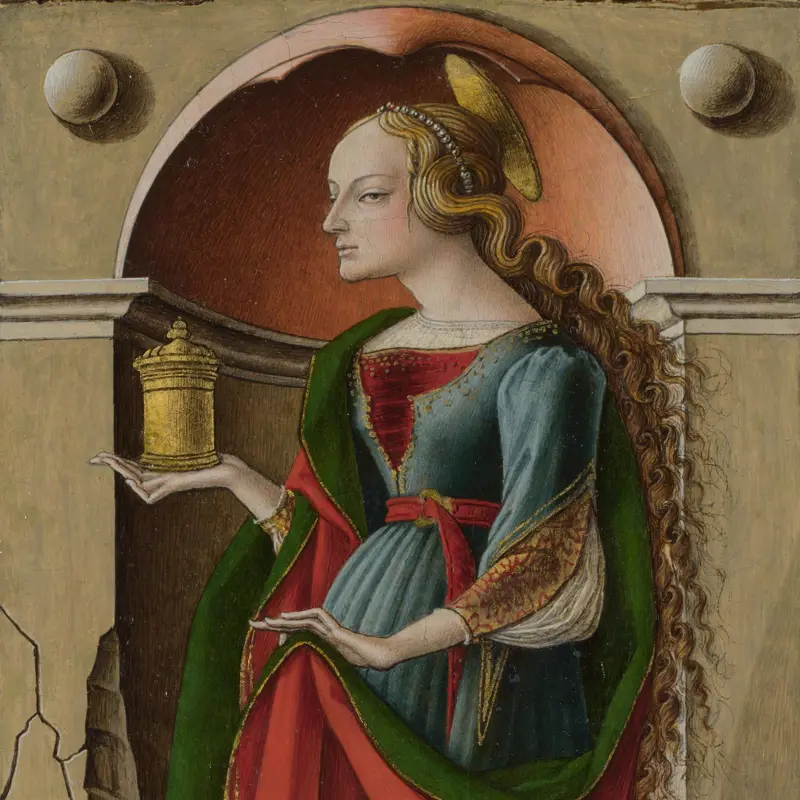
There is another dimension to Mary Magdalene's identity that has been almost entirely lost in traditional Christian teaching, and it concerns her role as what the ancients called a miraphor. The miraphors were priestesses devoted to the sacred oils and plants, including the substances that could awaken consciousness and open the doors of perception to higher realities.
This tradition stretches back through the centuries to ancient Egypt, where the priestesses of Hathor and Isis mastered the arts of sacred ointment and visionary medicine. The oils were used not merely for healing the physical body but for initiating transformation of consciousness, for preparing the soul for its journey into the higher realms.
Consider that the very word Essene, denoting the mystical Jewish community from which Jesus and his inner circle emerged, means "oil experts." The Garden of Gethsemane, where Jesus spent his final night in prayer, was an oil press. And when Mary Magdalene appears at the empty tomb on Easter morning, she comes bearing the sacred oils for anointing.
All of the elders present at the crucifixion and resurrection, including Joseph of Arimathea and Nicodemus, were practitioners of this same tradition. They were masters of the plants and herbs that could transfigure the body, that could open the gates between worlds. Mary Magdalene was not a passive witness to these events. She was an active participant, bringing her own deep knowledge of the transformative arts to the supreme moment of Christian mystery.
The Financier of the Ministry
The Gospels tell us plainly that Mary Magdalene and several other women provided for Jesus and his disciples "out of their own means." This simple statement conceals an extraordinary reality. Mary Magdalene came from a family of considerable wealth, possibly of Syrian lineage, and she used that wealth to finance the entire Jesus movement.
Without her resources, there would have been no ministry. The journeys through Galilee and Judea, the feeding of crowds, the support of the inner circle of disciples, all of this was made possible by Mary Magdalene's patronage. She was not a follower who tagged along at the margins. She was a co-creator of the mission itself, bringing both her spiritual gifts and her material resources to the great work of transformation that Jesus had come to accomplish.
Their paths merged at Capernaum, at the very moment when Jesus was about to perform the miracle of feeding the five thousand. In that moment, something was sealed between them, a recognition of shared purpose that would carry them through the crucifixion, through the resurrection, and beyond, into the centuries that followed.
The Journey to Gaul
The traditional Christian narrative largely abandons Mary Magdalene after the resurrection. She appears, she witnesses, and then she vanishes from the story. But in Southern France, a very different tradition has been preserved for nearly two thousand years, one that tells us what happened next.
After the crucifixion, resurrection, and ascension of Jesus, the situation in Palestine became extremely dangerous. Rome sent its legions to crush the Jesus movement, murdering anyone with firsthand knowledge of the events. The inner circle had to flee, taking their scrolls and their sacred knowledge with them, scattering to the four directions.
Mary Magdalene, along with her daughter Tamar (also called Sarah), the other Marys who had been part of the ministry, and Saint Maximin, loaded onto a boat and sailed across the Mediterranean. They came ashore at a place now called Saintes-Maries-de-la-Mer, the Holy Marys of the Sea, on the southern coast of France. And there they established what would become the seed of Christianity in Gaul.
For the past twenty years, I have led pilgrimages to this region, walking the Mary Magdalene trail through the sacred landscape of Provence. The tradition is not merely legend here. It is woven into the very stones of the churches, the names of the villages, the prayers of the faithful who have venerated her for centuries.

The Holy Cave of Saint Baume
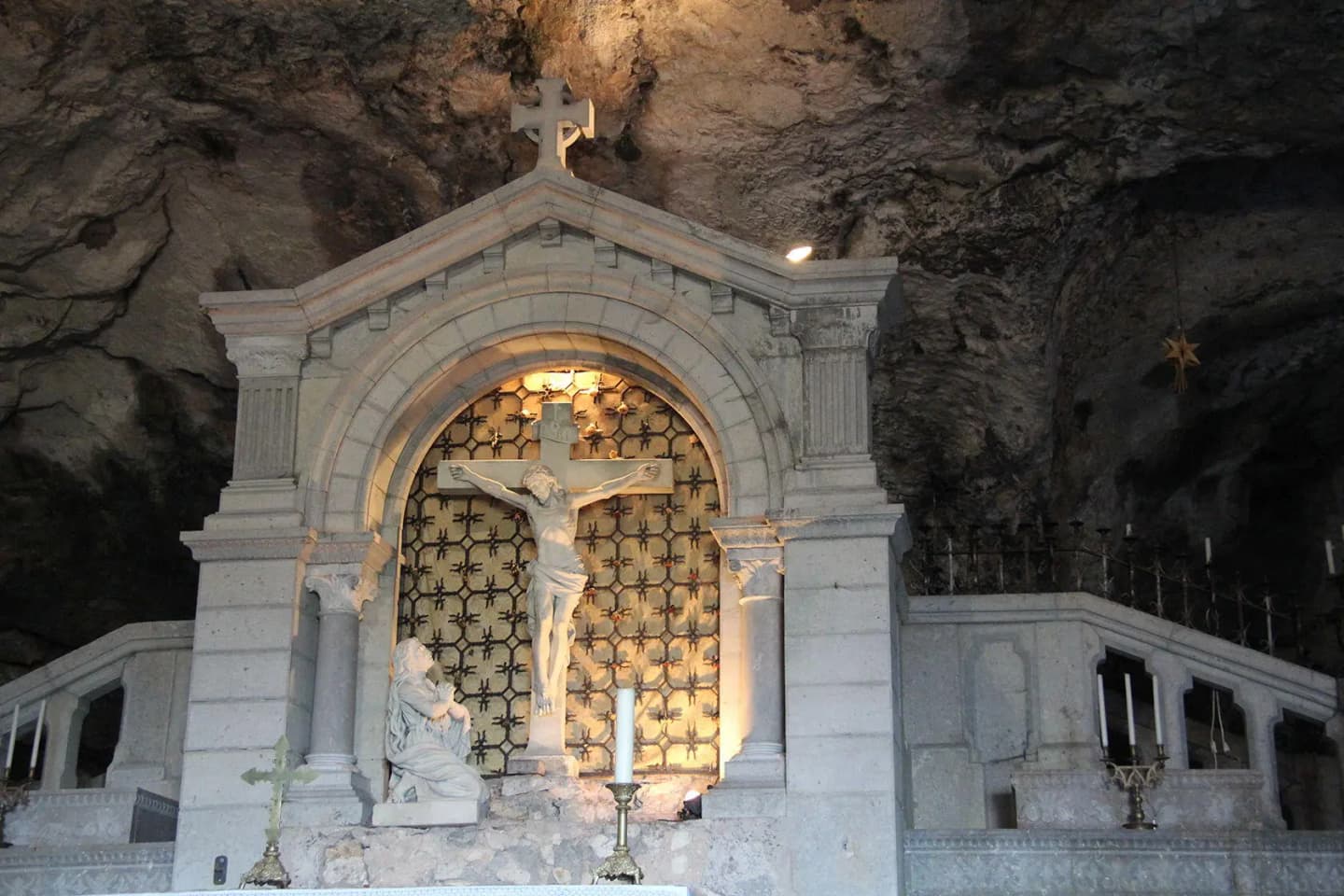
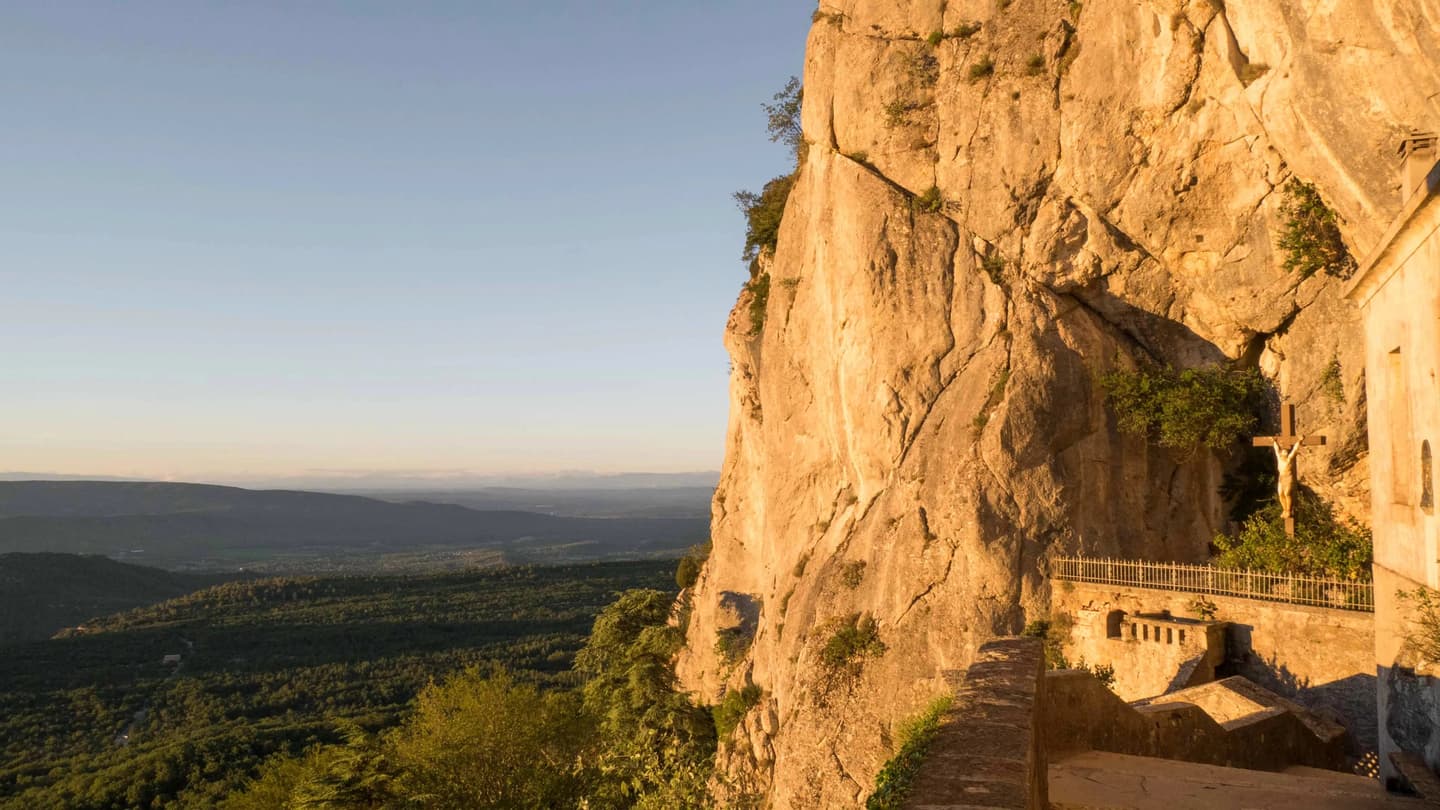
Mary Magdalene spent her final years at a place called Saint Baume, which translates as "the holy oil" and "the holy cave." High in the limestone cliffs of Provence, there is a grotto where tradition holds that she lived, prayed, and continued her work of spiritual transformation.
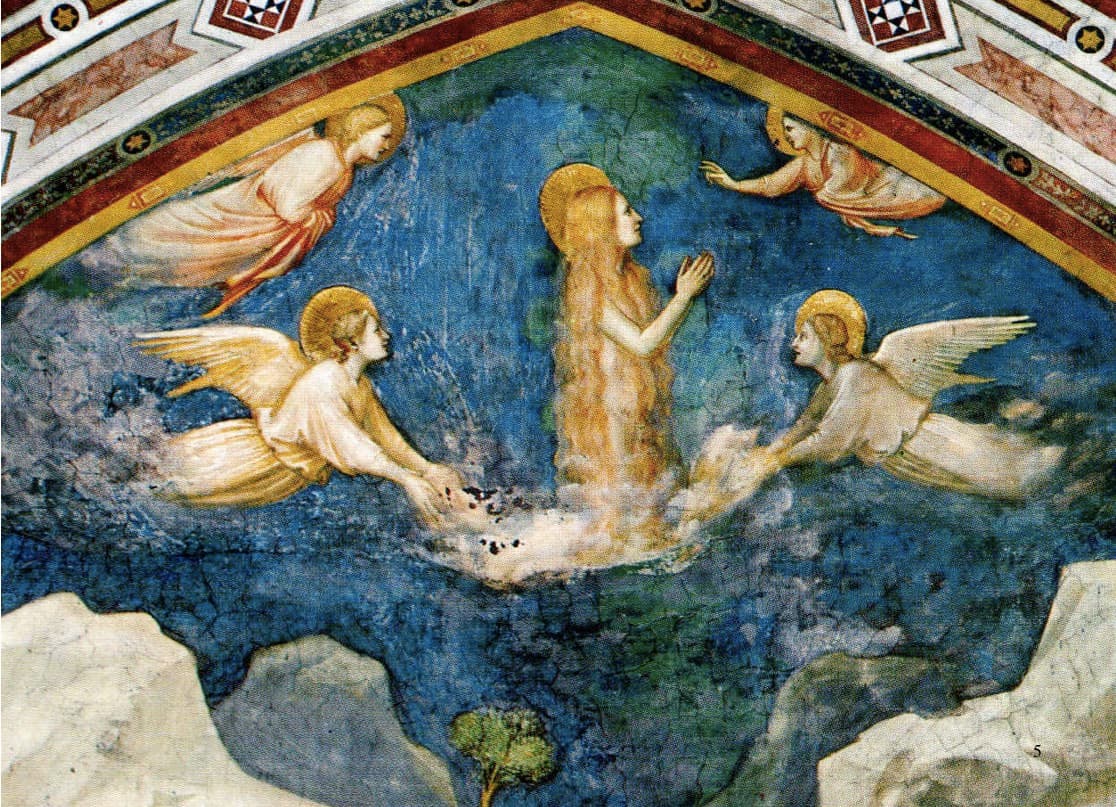
What the local tradition preserves about her time in this cave speaks directly to the ascension teachings that lie at the heart of my work. Each day, it is said, angels would come to Mary Magdalene. They would lift her from the cave, carry her into the heavenly realms, and feed her with the star food, the manna, the celestial nourishment that sustained the prophets and patriarchs of old. And then they would return her to earth, to continue her earthly mission until the time came for her final departure.
This is not merely pious legend. It is a precise description of the ascension process as it was understood in the ancient world, the capacity of the illumined soul to travel consciously between the realms of matter and spirit, to receive sustenance from dimensions beyond the physical, and ultimately to transform entirely into a being of light.
Mary Magdalene, according to this tradition, attained her own ascension. She did not merely witness the resurrection of Christ. She followed the same path herself, demonstrating that the promise he made to his disciples was real and achievable. What he did, we can do also. And Mary Magdalene was among the first to prove it.
The Return of the Divine Feminine
We are living in a remarkable time, a period when truths long suppressed are rising back to the surface of collective consciousness. The past several decades have seen an explosion of interest in Mary Magdalene, from scholarly research into the Dead Sea Scrolls and Gnostic gospels to popular works like The Da Vinci Code that have brought these ideas to millions.
This is not coincidental. For six thousand years, human civilization has been shaped predominantly by masculine energy, by the impulse to conquer, to build, to dominate. This energy was necessary for a time. But we are now entering a new phase, one in which the feminine principle must reassert itself if we are to survive as a species and evolve into what we are meant to become.
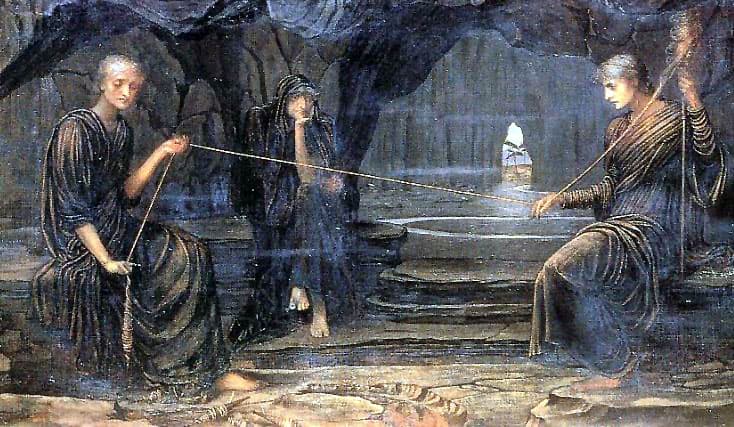
The Divine Feminine is the energy that weaves, that heals, that brings wholeness from fragmentation. From Isis weaving the bandages of Osiris, to Athena weaving the world's first tapestry, to the Virgin Mary weaving the veil for the Jerusalem Temple, the feminine has always been depicted as the one who works with threads, who binds the worlds together, who creates continuity between realms.
Mary Magdalene stands at the heart of this tradition. Her restoration to her rightful place in Christian understanding is not merely an act of historical correction. It is a necessary step in the rebalancing of our world, a reclamation of the illuminated feminine that must take its place alongside the masculine if we are to find our way through the challenges that lie ahead.
The Invitation
For those who wish to go deeper into these mysteries, I invite you to join me on pilgrimage to Southern France, where we walk the actual landscapes that Mary Magdalene walked, where we enter the cave at Saint Baume and feel the presence that still lingers there, where we trace the golden thread of transmission from the shores of Galilee to the hills of Provence.
The truth about Mary Magdalene is not merely interesting historical information. It is a key that unlocks something within us, a remembrance of what Christianity was before it was diminished and controlled, a vision of human potential that includes the full flowering of both masculine and feminine, a path of illumination that remains open to all who are willing to follow the thread.
Glossary
Merkabah mysticism
An ancient Jewish mystical tradition focused on achieving direct experience of the Divine through meditation and contemplation. The merkabah, or "chariot," refers to the throne-chariot of God described in the Book of Ezekiel, and practitioners sought to ascend through the heavenly realms to encounter this divine presence.
Magdala Stone
A carved stone block discovered in 2009 in the ruins of a first-century synagogue at Magdala, Israel. It bears one of the earliest known images of the seven-branched menorah, likely carved by someone who had seen the Temple in Jerusalem before its destruction in 70 CE.
Golden Legend
A medieval collection of saints' lives compiled by Jacobus de Voragine around 1260. It was one of the most widely read books in Europe for centuries and preserves many traditions about Mary Magdalene that contradict her later characterization as a prostitute.
Koinonias
A Greek term meaning fellowship, partnership, or intimate spiritual companionship. Early Christian texts use this word to describe the relationship between Jesus and Mary Magdalene, suggesting a bond far deeper than that of teacher and student.
Miraphor
A priestess devoted to the sacred arts of oils, herbs, and plant medicines. This tradition, which stretches back to ancient Egypt, involved the preparation and use of substances for healing, spiritual transformation, and the opening of consciousness to higher realities.
Essene
A mystical Jewish sect active during the Second Temple period, believed to be the community that produced the Dead Sea Scrolls. The name derives from their expertise in sacred oils. Jesus, John the Baptist, and Mary Magdalene are all thought to have had connections to the Essene community.
Garden of Gethsemane
Located on the Mount of Olives near Jerusalem, this garden where Jesus spent his final night in prayer was an olive oil press. The name itself comes from the Hebrew words for "oil press," connecting it to the broader tradition of sacred oils.
Saintes-Maries-de-la-Mer
A town on the Mediterranean coast of southern France where, according to Provençal tradition, Mary Magdalene, the other Marys, and several disciples landed after fleeing persecution in Palestine. The name means "Holy Marys of the Sea."
Saint Baume
A mountain and cave sanctuary in Provence, France, where Mary Magdalene is said to have spent the final thirty years of her life in prayer and contemplation. The name combines "saint" with the Provençal word "baumo," meaning grotto or cave.
Ascension
The transformation of consciousness and body into a higher frequency state, often described as the activation of the "light body." This is not merely a metaphor but an actual process of spiritual evolution that was central to the original Christian teaching.
Manna
In biblical tradition, the miraculous food that sustained the Israelites during their journey through the wilderness. In mystical teaching, manna represents celestial nourishment, the "star food" that sustains the soul during its journey between realms.
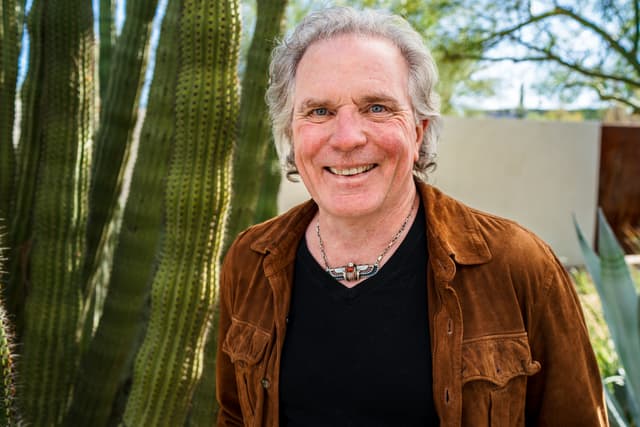
William Henry is a researcher, author, and guide who has spent over thirty years investigating the mysteries of human transformation and ascension. He leads annual pilgrimages to sacred sites including the Mary Magdalene trail in Southern France.